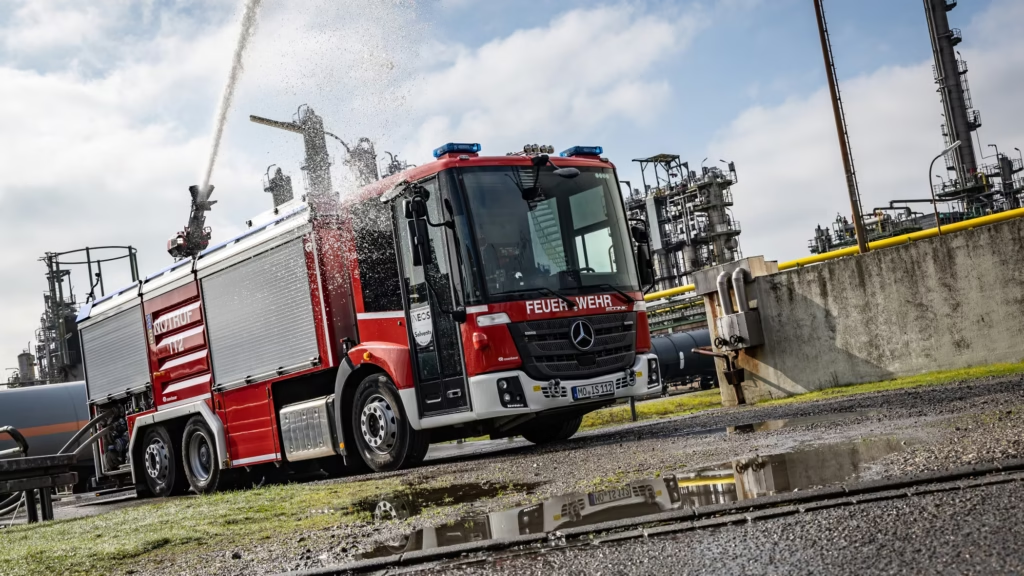
Trusted Next-Gen Fire-Fighting Vehicles Built for Safety and Speed
Next-Gen Fire-fighting vehicles play a crucial role in emergency response systems across the globe. These highly specialized machines are engineered to provide rapid and effective support in controlling fires, rescuing victims, and safeguarding both urban and rural communities. Designed to operate under extreme conditions, fire-fighting vehicles must be equipped with advanced technologies, high-performance engines, and robust safety features to meet the demands of modern fire departments.
There are many different types of Next-Gen Fire-fighting vehicles, each tailored for specific tasks. From pumpers and water tenders to aerial ladder trucks and rescue units, the design and function of these vehicles vary depending on the nature of the emergency. For example, aerial fire-fighting vehicles are equipped with extendable ladders or platforms to reach high-rise buildings, while tanker trucks are built to carry large volumes of water to locations where hydrants may not be available.
In recent years, innovation in the automotive and emergency services industries has led to significant advancements in Next-Gen Fire-fighting vehicles . Manufacturers now focus on improving maneuverability, fuel efficiency, and environmental sustainability without compromising performance. Hybrid and electric Next-Gen Fire-fighting vehicles are starting to emerge, reflecting the global push for cleaner energy solutions even in emergency response.
Moreover, the integration of smart technologies has enhanced the functionality of modern fire-fighting vehicles. Real-time GPS tracking, digital incident reporting, and thermal imaging systems are now standard features in many models. These additions help fire crews respond more effectively, navigate complex environments, and make data-driven decisions during high-pressure operations.
Customization is also a key element in the design of fire-fighting vehicles. Different regions and departments may require unique configurations based on terrain, climate, and population density. For instance, rural departments might need fire-fighting vehicles with off-road capabilities, while urban departments may prioritize compact designs for navigating tight city streets. This flexibility ensures that every emergency unit is well-equipped to handle its specific challenges.
Durability is another critical consideration. Fire-fighting vehicles must be able to withstand extreme heat, smoke, and debris while maintaining full operational integrity. The materials used in their construction—such as heat-resistant alloys and reinforced glass—are chosen to maximize safety and reliability. Routine maintenance and rigorous testing are essential to keep these vehicles in optimal condition, especially given the intense environments in which they operate.
Training plays an equally important role. Firefighters must be thoroughly familiar with the equipment and technology integrated into their fire-fighting vehicles. This includes understanding how to operate pumps, ladders, hoses, and onboard computer systems. Proper training ensures that teams can react quickly and efficiently, minimizing damage and saving lives during an emergency.
Globally, governments and municipalities continue to invest in upgrading their fleets of fire-fighting vehicles. This reflects the growing awareness of the importance of preparedness in the face of natural disasters, industrial accidents, and urban fires. Whether responding to forest fires in remote locations or structural fires in densely populated cities, fire-fighting vehicles remain a backbone of public safety infrastructure.
In conclusion, fire-fighting vehicles are far more than just trucks with hoses. They are complex, mission-critical machines designed to meet the evolving needs of emergency response teams. As technology advances and environmental concerns grow, we can expect further innovation in the design and capabilities of fire-fighting vehicles, ensuring that fire services are always ready to protect lives, property, and the environment.Blog
click here.https://youtu.be/GEJN7xKfA_A?si=nt1DiSCVVkHu7Iiv